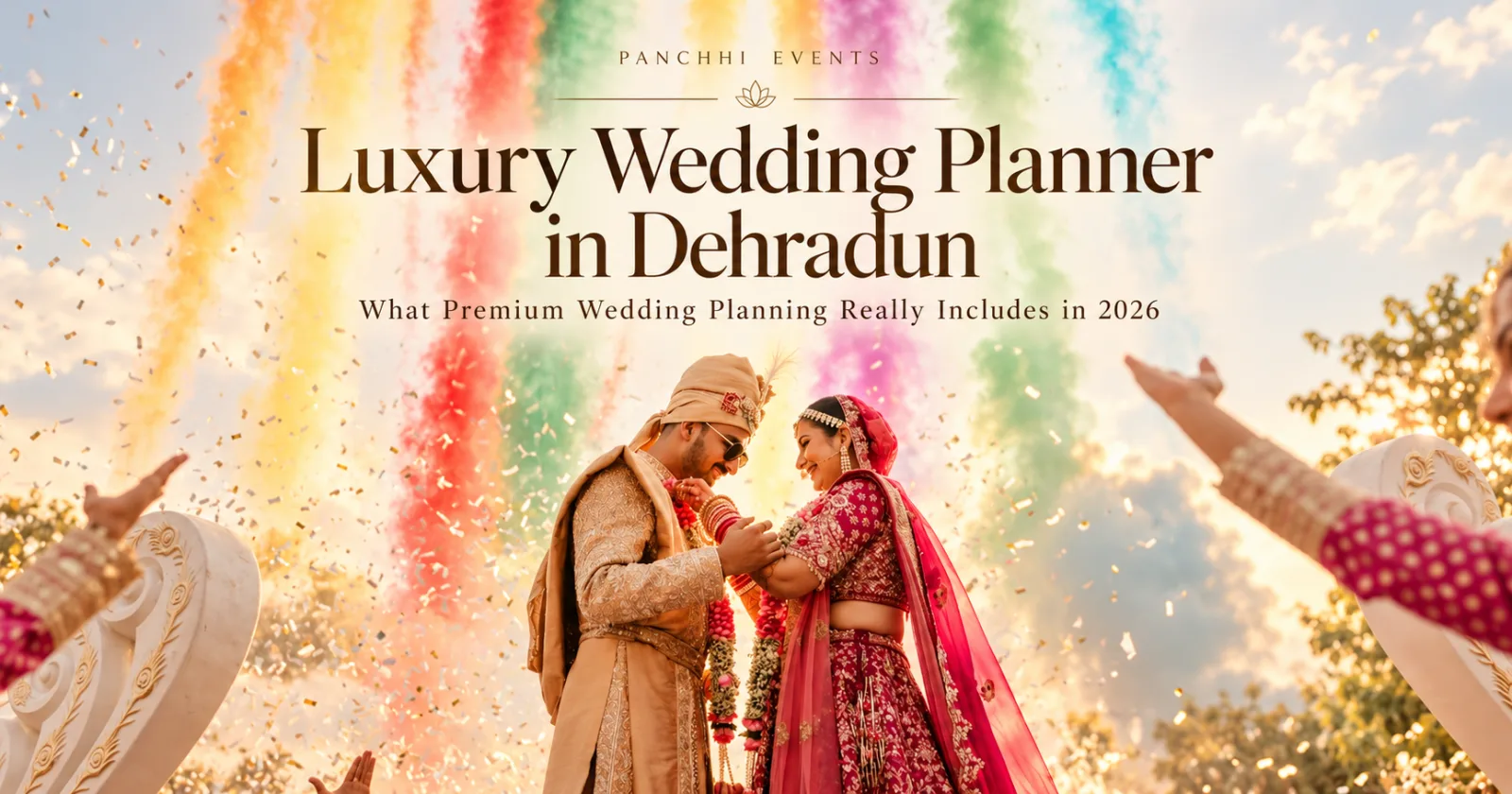
A luxury wedding is not simply a larger version of a regular wedding.
The real difference is in how carefully the experience is designed, connected and managed - from the first guest arrival to the final departure. A professional luxury wedding planner in Dehradun should therefore do much more than coordinate decorators and vendors. Premium wedding planning can involve venue strategy, hospitality, production, logistics, design, food, entertainment, timelines, contingency planning and constant coordination between dozens of moving parts.
For families planning a wedding in Dehradun, Mussoorie or elsewhere in Uttarakhand, the biggest advantage of working with an experienced event team is not simply getting “more”. It is having fewer things left to chance.
That distinction matters even more in 2026, because premium weddings in India are becoming more experience-led, more destination-oriented and more demanding in terms of hospitality.
Luxury Weddings in India Are Becoming More Experience-Led
The premium wedding market is changing quickly. The WeddingSutra Luxury Survey 2026 points to growing interest in destination-style celebrations beyond the traditional palace markets, including Dehradun, Mussoorie, Rishikesh and other Uttarakhand locations.
The point is not that every premium wedding requires an extravagant budget. It is that families are becoming far more deliberate about where they spend. Venue, accommodation, food, décor, production, entertainment and guest hospitality now need to work together as one experience.
Recent reporting on rising destination wedding expenditure in India also shows how venue and accommodation can consume a significant share of premium wedding budgets. This makes early planning important because the venue decision affects almost every other cost.
A wedding with 250 guests over three days has a very different structure from a 600-guest reception. A celebration where most guests travel from Delhi, Mumbai or overseas also needs a different hospitality plan from a largely local event.
Premium planning begins by understanding that structure first.
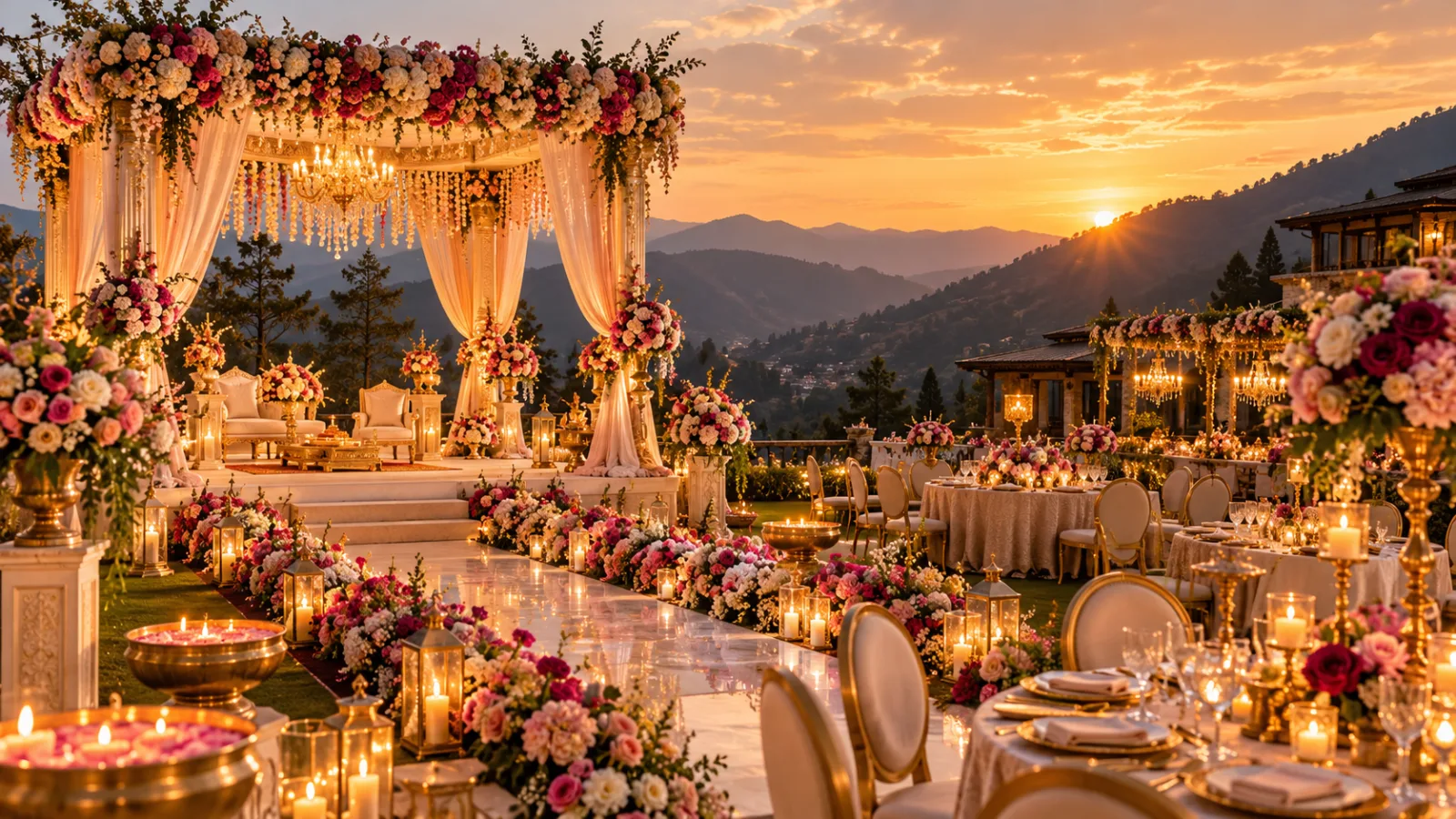
Premium Planning Starts Before Decor Is Discussed
One of the most common mistakes in wedding planning is beginning with décor references.
Decor matters, but it should not be the first decision.
Before discussing floral installations, colour palettes or stage design, a planner needs to understand the family, guest profile, preferred dates, number of functions, ceremony requirements, room inventory, travel patterns and budget framework.
A good first planning discussion should answer questions such as:
• How many guests are likely to attend each function?
• How many rooms are required?
• Which guests are travelling from outside Uttarakhand?
• How many functions are planned, and over how many days?
• Are there elderly guests who need easy movement?
• Are any functions outdoors?
• What matters most to the family: food, design, hospitality, entertainment, privacy or convenience?
Once these fundamentals are clear, creative decisions become easier and more realistic.
Venue Selection Is One of the Most Important Decisions
A beautiful venue is only useful if it actually works for the wedding.
Capacity, room inventory, kitchen capability, event timings, noise restrictions, weather backup, service access, parking, guest movement and vendor entry can matter just as much as the view.
This is particularly important for destination weddings in Uttarakhand. Hill destinations are visually exceptional, but they require stronger planning around travel times, weather, loading schedules, accommodation distribution and guest transfers.
When comparing venues, do not ask only, “Which property looks best in photographs?” instead Ask:
• Where will most guests stay?
• Can the venue accommodate the required room block?
• Can a mehendi, cocktail and wedding ceremony each feel distinct without excessive movement?
• What happens if the weather changes?
• Are there strong indoor alternatives?
• Can senior guests move comfortably between rooms and event spaces?
• Can production vehicles load in without disrupting guests?
Those questions often reveal more than a venue brochure.
Uttarakhand Is Becoming a Bigger Part of the Destination Wedding Conversation
Mussoorie and Rishikesh have been established wedding destinations for years, but Uttarakhand’s wedding landscape is getting broader. Current reporting on Uttarakhand’s emerging wedding destinations highlights growing interest in locations such as Jim Corbett, Nainital, Bhimtal and Lansdowne alongside the established favourites.
For families based in North India, this creates an appealing alternative. A wedding in Uttarakhand can offer the atmosphere of a destination celebration without necessarily requiring the complexity of moving hundreds of guests overseas.
Dehradun also works naturally as a planning and logistics base for many hill destinations. For families considering a local consultation before choosing the venue, Panchhi Events in Dehradun provides a convenient starting point.
Luxury Is Mostly About Guest Experience
A guest should not need to understand the event plan. They should simply experience it.
They arrive and know where to go. Their transfer is waiting. Their room is ready. Their welcome information is clear. They know when the next function begins and how to reach it. Dietary requirements have been considered. Senior family members are not left walking long distances between venues. Luggage, room allocation, transport and event timings work quietly in the background.
This is where premium hospitality becomes visible without looking operational.
Recent coverage of how luxury hotels are redefining destination weddings reflects the same shift: properties are increasingly expected to support rituals, logistics, local experiences, privacy and destination storytelling rather than simply rent a hall.
For a planner, that creates both an opportunity and a responsibility. The hotel may manage rooms and food beautifully, but someone still needs to make sure the entire wedding family, vendors, production, ceremonies, transport and guest communication works as one event.
Good Wedding Design Should Feel Personal, Not Expensive
Luxury decor is often misunderstood. The goal is not to fill every empty surface.
A well-designed celebration should feel intentional. The venue, architecture, season, family preferences and function itself should guide the visual direction.
A daytime mehendi in the hills may benefit from natural light, seasonal flowers and comfortable social seating rather than heavy theatrical production. A sangeet or cocktail evening may need stronger lighting, AV, staging and entertainment infrastructure. The wedding ceremony itself may require a completely different visual language.
Current premium-wedding trends increasingly favour local craftsmanship, native materials and destination-specific details over generic “Instagram sets”. This is a useful direction because the best luxury events do not look as though they could have happened anywhere.
Production Is the Part Guests Should Never Notice
Behind an elegant wedding is a large amount of technical work.
Sound. Lighting. Power backup. Stage engineering. LED displays. Artist requirements. Entry cues. Music playback. Photography positions. Generator placement. Vendor loading. Rehearsal schedules.
The objective is not to make guests think about any of it. The objective is to make sure they never have to.
Premium event production means technical work supports the experience rather than competing with it. A beautiful stage that blocks guest sightlines is not good design. A dramatic entry that delays dinner by forty minutes is not good planning.
A high-end event is one where creative ambition and operational reality work together.
Guest Hospitality Has Become a Major Part of the Experience
One of the strongest changes in luxury weddings is the attention paid to hospitality.
Welcome hampers are more thoughtful. Food is more personalised. Guests may have time for brunches, local experiences, spa appointments or informal family gatherings between functions. Even the schedule itself is changing.
Rather than packing every hour with activity, many premium weddings create more breathing room so guests can actually enjoy the destination. Current discussion around slow weddings and experience-led destination celebrations reflects this shift.
This approach makes particular sense in Uttarakhand. If families have travelled to the hills, give them time to enjoy being there.
Luxury Also Means Knowing What Not to Add
One of the most valuable things a planner can do is say no.
Not every entertainment act is necessary. Not every function needs a completely new décor concept. Not every trend belongs in every wedding. Not every guest needs to be moved to another venue every few hours.
A luxury wedding becomes memorable when decisions feel confident.
Adding more suppliers, installations and activities can increase cost without improving the experience. The planner’s job is not simply to arrange everything the family requests; it is also to identify where an idea adds value and where it creates unnecessary complexity.
That is particularly relevant for HNI and premium families because the number of available options can become overwhelming very quickly.
Start Planning Earlier Than You Think
The best venues and wedding dates do not remain available indefinitely.
Current wedding booking trends in India show premium properties receiving enquiries and bookings months in advance, with growing expenditure on curated guest experiences and personalised design.
For a complex destination wedding, even four to six months can feel tight. If a particular venue, room inventory, artist or wedding date is important, beginning earlier gives the family more control.
It also gives the planner time to compare options properly instead of reacting to whatever remains available.
What Should You Discuss with a Wedding Planner in the First Meeting?
The first conversation does not need to cover every detail.
It should establish the shape of the wedding.
The planner will usually need to understand the preferred city or destination, approximate guest count, number of functions, tentative dates, accommodation expectations, type of experience the family wants and the budget framework.
It also helps to explain what matters most.
For one family, food may be non-negotiable. For another, guest hospitality is the priority. Some care deeply about design and photography. Others want entertainment to lead the celebration.
Those priorities influence where the budget should go.
A planner who understands them early can build the rest of the event around what actually matters.
Planning a Luxury Wedding in Dehradun or Uttarakhand?
Panchhi Events works across weddings and social celebrations alongside corporate, government and B2B events.
Explore the company’s wedding and social event planning, view real event setups in the Panchhi Events Gallery, or read Panchhi Events client testimonials.
To understand the team and company background, visit About Panchhi Events.
For directions or an in-person planning conversation, find Panchhi Events in Dehradun.
When you are ready to discuss your wedding date, destination, guest requirements and planning scope, contact Panchhi Events.